Your water heater is leaking: shut it down now
A leaking water heater is an emergency, and our line is open 24/7. Start with the unit. For an electric heater, turn off the breaker for it. For a gas heater, turn the gas control to off. Do not touch the unit if there is water around electrical parts or if you smell gas. Call the gas utility or 911 first.
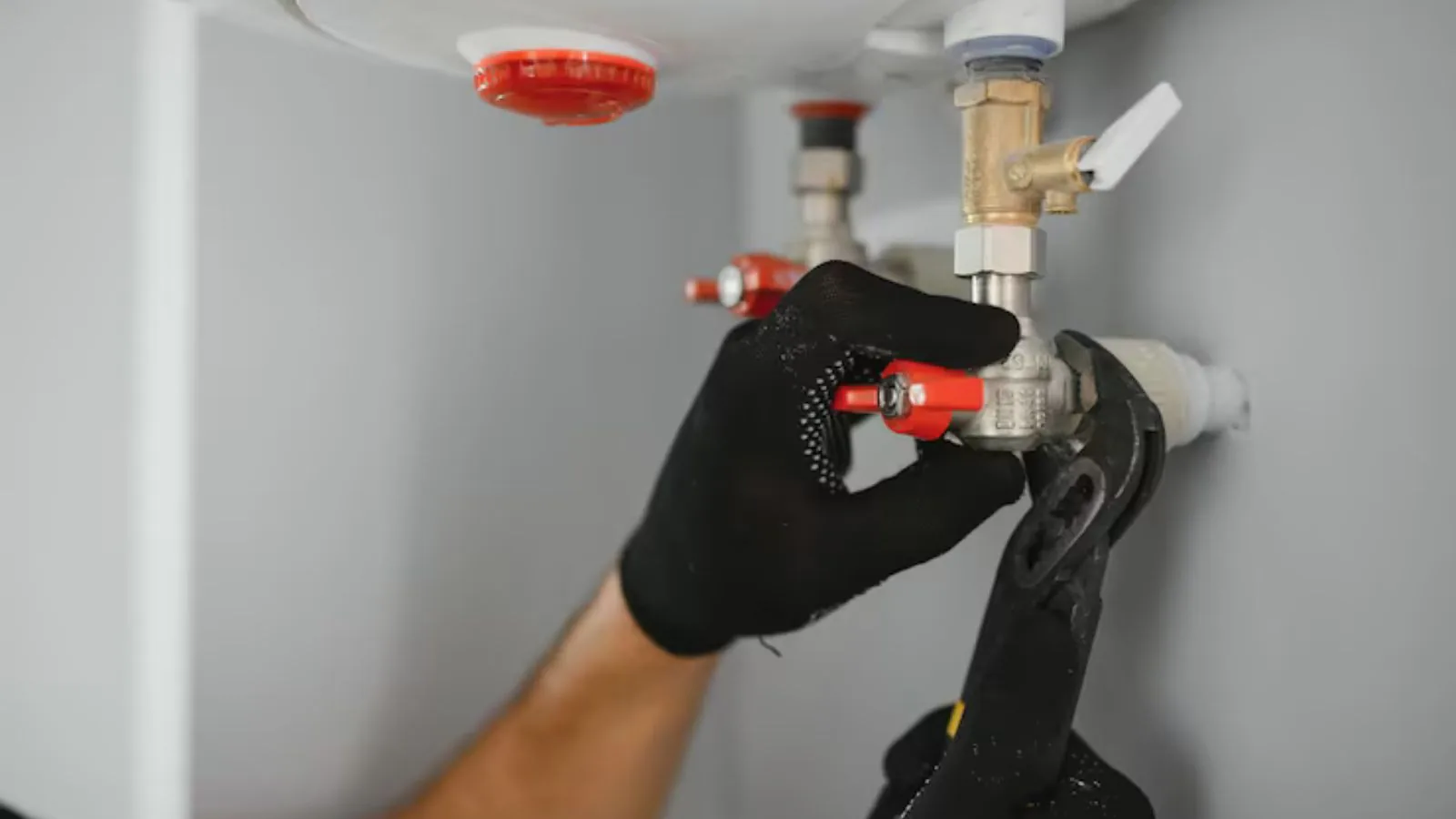
Close the cold water supply valve on the pipe above the heater, usually a lever or a wheel. This stops new water from filling the tank. Then open a hot tap somewhere in the house so the tank can drain without a vacuum.
Do not step into deep water near the unit. Move belongings out of the wet area. Call us once the unit is off. Water from a tank is clean at first, but it spreads across the floor and into walls quickly, so the sooner extraction starts, the better.
Why a tank leak spreads farther than people expect
A standard residential tank holds a few dozen gallons. When the shell fails, that volume goes onto the floor in minutes, and the supply line keeps feeding it until the valve is closed. The water goes where the floor slopes, often under walls into nearby rooms.
Water heaters sit in basements, closets, garages and utility rooms. A basement floor with a drain handles some of the volume. A closet on a finished floor has nowhere for it to go but into baseboards and carpet.
Where heater leaks start
Not every leak is a dead tank. These are the common sources:
- Corrosion in the tank shell, which usually means the heater is at the end of its life.
- A loose or worn connection on the hot or cold line.
- A temperature and pressure relief valve that is leaking or discharging.
- A failed drain valve at the base of the tank.
- Condensation or a leak from a nearby pipe that looks like a heater leak.
A plumber decides whether to repair or replace the heater. We handle the water, the drying and the damaged materials.
Water heater leak damage by location
The place the heater sits changes what has to be done.
| Location | What gets wet | Typical work |
|---|---|---|
| Basement with a floor drain | Floor, wall bases, stored items | Extract, dry, clean, check stored contents |
| Finished basement | Carpet, pad, drywall, baseboards | Extract, remove pad, dry walls, see basement cleanup |
| Utility closet on a main floor | Flooring, subfloor, nearby walls | Extract, lift flooring, dry cavities |
| Garage | Concrete, stored goods | Extract, clean, move belongings |
Water heater leaks do not stop on their own
Shut the unit down, then call day or night.
How the cleanup is done
The crew extracts the water with wet vacuums or pumps, then checks nearby walls and floors with a moisture meter. Baseboards and the bottom of drywall are often removed to let wet cavities drain and dry.
Air movers and dehumidifiers run until readings match the dry reference. If carpet and pad were soaked, the pad is removed. Hard flooring is checked for water beneath. Once dry, the crew can hand the space back for the plumber to install a new heater.
Cost and insurance
Price depends on how much water came out, which rooms were reached, the flooring type and how many days of drying equipment are needed. A tank that failed in a basement with a drain is a smaller job than one in a carpeted closet.
Sudden tank failure is often covered by homeowners insurance, while a leak that went on for months may not be. The water heater itself is usually not covered when it simply wears out. Check your policy or ask your insurer. Want your real number? Call (844) 950-6900 and we will explain the scope and price before work starts.
Frequently asked questions
Yes. The line is open 24/7, and a same-day response is offered when a crew is available. Shut the unit off first, then call.
Shut off power or gas to the heater and close the cold water supply valve. If water is near the electrical panel or you smell gas, leave and call the utility or 911 before anything else.
Not until a plumber has repaired or replaced the unit. Keep the unit off and the supply closed.
Usually not. Policies often cover sudden resulting damage to the home but not the heater that failed from age. Check your policy or ask your insurer.
No. A licensed plumber handles the heater. We extract water, dry the area and restore the damaged materials.