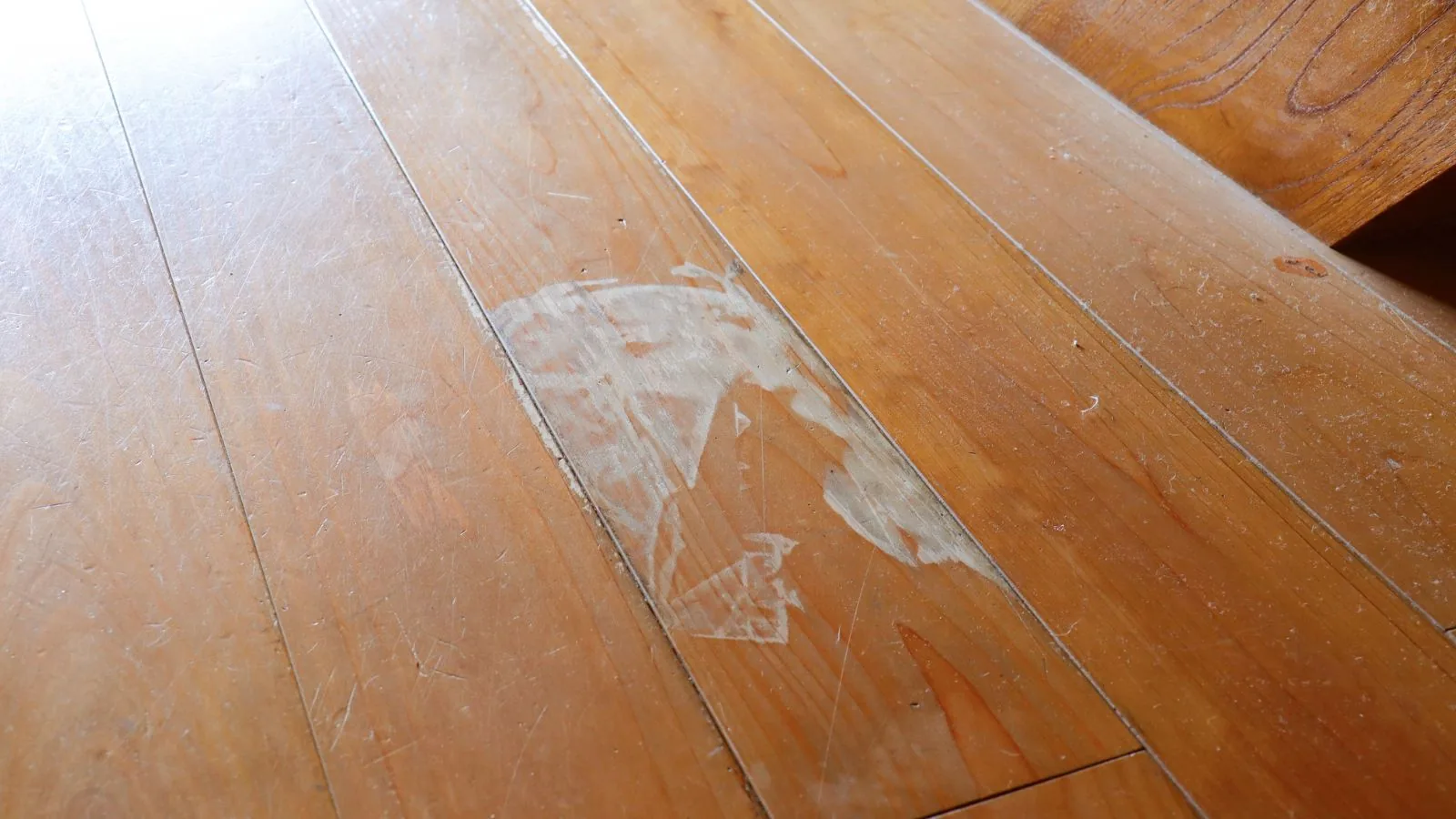
Hardwood floor gets wet: what to do in the first day
Hardwood reacts quickly to water. Boards soak it up, swell and push against each other. The first sign may be cupping, where the edges rise, or a bounce underfoot. Speed matters, so call as soon as you see water. A same-day response is offered when a crew is available and our line is open 24/7.
Remove rugs and furniture, mop up standing water, and open windows if the weather is dry. Do not use heat to dry the floor quickly, since that can cause cracks. Do not use a household vacuum on wet floors.
What happens to wood when it gets wet
Wood is a natural sponge. Water enters through the edges and the unfinished bottom, and the board swells. The finish on top holds the water in, which is why the floor can look fine for a few days while the boards soak.
Cupping means the edges rise higher than the center. Crowning is the reverse. Buckling is when the boards lift off the subfloor. Cupped floors often flatten after proper drying, while buckled floors usually need replacement.
Wood floor types and what is possible
Flooring type changes the odds.
| Type | Water tolerance | Typical outcome |
|---|---|---|
| Solid hardwood | Low | Can often be dried if caught early |
| Engineered hardwood | Mixed | Dry or replace depending on the layers |
| Laminate | Low | Usually replaced if swelled |
| Luxury vinyl plank | Higher | Often dried or replaced if water got beneath |
How crews dry a wet hardwood floor
The method depends on how wet it is:
- Extract standing water.
- Place drying mats that draw water out through the surface.
- Run air movers and dehumidifiers to remove moisture from the air.
- Check the subfloor with a moisture meter.
- Sand and refinish only after the floor stabilizes.
If the leak came from a washing machine or a dishwasher, the steps are similar. See our appliance leak water damage page.
Wood floors can warp within days
Call day or night.
The layers under the boards: why the subfloor matters
A hardwood floor sits on a subfloor, and sometimes on a layer of felt, plywood or sleepers. Water that gets between those layers cannot evaporate upward through the finish. It can sit there for days and keep the wood wet.
That is why a floor can look dry on top and still be wet below. A moisture meter checks both the boards and the subfloor. Pin-style meters measure resistance between two probes, and pinless meters scan the surface. Crews often use both, and compare readings against a dry area of the same floor.
If the subfloor is wet, drying mats, small holes in the baseboard for air flow, or lifted boards may be needed. The goal is to avoid taking up the entire floor when only a section is affected.
When to replace instead of dry
If boards are buckled, black with mold, or have been wet for days, replacement is often cheaper than drying. If only a section is wet, a contractor can replace it and blend the stain.
The crew checks the subfloor, because water trapped beneath can keep damaging the wood above. A drying plan with readings is better than a guess.
Cost and insurance
Price depends on the floor area, the type of wood, how wet it is and how many days of drying are needed. Refinishing or replacement is separate.
Sudden leaks are often covered by homeowners insurance, while slow leaks and neglect often are not. Check your policy or ask your insurer. Want your real number? Call (844) 950-6900 and we will explain the scope and price before work starts.
What the published standard says about wood floors
ANSI/IICRC S500 treats wood flooring as a material that can be dried when conditions allow and replaced when they do not. The standard is a published reference, and it shows why moisture readings are taken in both the boards and the subfloor.
No standard can promise that a floor will lie flat again. Cupping may settle as the wood dries, and a refinishing decision should wait until readings are stable.
Frequently asked questions
Often, if they are dried quickly. Cupped boards may flatten. Buckled boards usually need replacement.
It can start within a day or two. The sooner drying starts, the better the odds.
No. Wait until the floor is dry and stable, which can take weeks.
No. A flooring contractor refinishes. We dry the floor and the subfloor.
Yes. Our line is open 24/7 and a same-day response is offered when a crew is available.