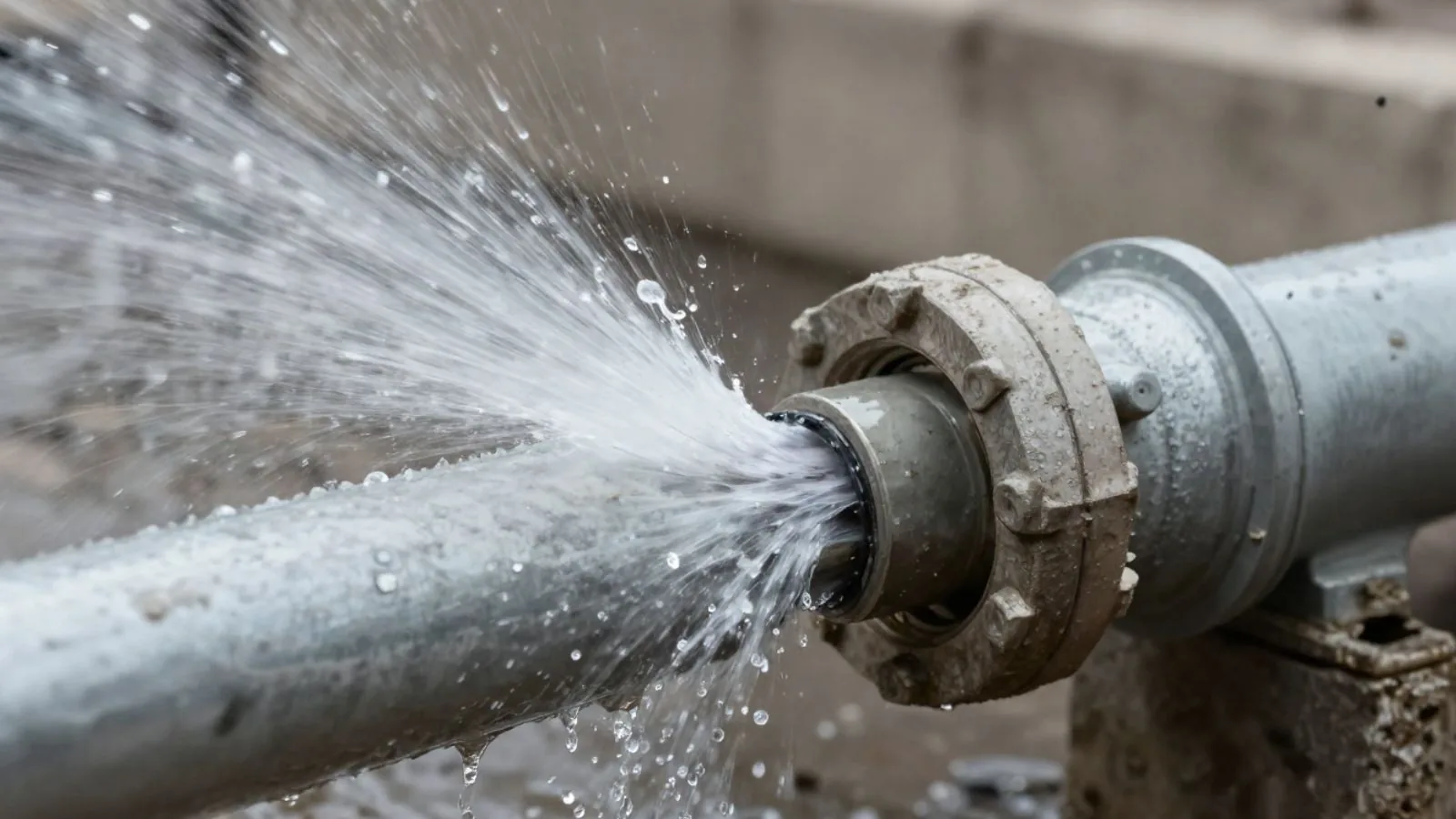
The pipe thawed and water is coming through: act now
A frozen pipe often does not leak until it thaws. Ice can split the pipe wall, then the ice melts and the water starts flowing. That is when homeowners find a wet ceiling or a stained wall. It is an emergency, and our line is open 24/7, including overnight and on weekends when freezes usually hit.
Close the main shutoff valve first, then open a faucet to drain the lines. Stay away from water that touches outlets or the panel. If the pipe is in a ceiling and the plaster is sagging, keep out of the room below it. A bulging ceiling can release a lot of water at once.
Do not use a heat gun, torch or open flame on a pipe. Frozen pipes that have not split can be warmed gently with a hair dryer on a low setting, but if you see water, treat it as a break and call.
Why a frozen pipe is different from other leaks
Water expands as it freezes, and that pressure usually splits the pipe in a short seam, not at the spot where the ice sits. The break shows up where the ice blockage built pressure between itself and a closed faucet. Pipes in exterior walls, attics, crawl spaces and garages are the usual targets.
The source is hidden inside a cold wall, so the first sign may be a stain several feet away. Water can travel along framing and pipes before it appears. That is why the crew checks beyond the visible wet spot with a moisture meter and a thermal camera.
Signs a frozen pipe has split behind a wall or ceiling
Not every freeze leaves a flood. Watch for these signs after a hard cold snap:
- A faucet that trickles or gives no water while others work.
- A new brown stain or bubbling paint on an exterior wall or ceiling.
- A damp smell in a closet, garage or room near an outer wall.
- The sound of running water when no fixture is on.
- A sudden rise in the water meter reading with all fixtures off.
If you see any of these, shut the main valve and call. A small split can look minor and still soak insulation and framing.
Dumont winters and where pipes tend to freeze
Winters in northern New Jersey include stretches below freezing, and the National Weather Service publishes local freeze data if you want the exact normals for your area. What matters for your house is the location of the pipe. Lines in an unheated garage, along a north wall, or under a porch are exposed no matter how mild the winter is.
Homes in Dumont and its neighbors that have a finished basement, an addition built over a crawl space, or a bathroom over an overhang can have pipes in cold cavities. If you are not sure, ask a plumber to show you where your supply lines run before the next cold snap. After a leak, we also check the nearby wall and drywall for water that stayed behind.
What to do and what to leave to a professional
Some steps are safe for homeowners and some are not.
| Step | Homeowner | Professional |
|---|---|---|
| Shut the main valve | Yes | Backup if you cannot reach it |
| Open a faucet to drain lines | Yes | Not needed |
| Thaw an unbroken pipe with a hair dryer | Yes, with care | If the pipe is hidden |
| Extract water and dry the structure | No | Yes, with extraction units and air movers |
| Repair or replace the split pipe | No | Licensed plumber |
A thaw can make the damage bigger by morning
Call day or night. A crew can start extraction and drying the same day when available.
How the dry-out is done after a frozen pipe break
The crew extracts standing water, cuts open the wall or ceiling where water is trapped, and removes insulation that cannot dry. Air movers and dehumidifiers run until the framing and sheathing reach the dry standard for the building.
If the pipe ran through an exterior wall, crews often leave the cavity open until a plumber has repaired the pipe and the readings are final. A ceiling that dropped water may also need to be handled as described on our ceiling water damage repair page.
Cost and insurance for a frozen pipe loss
Price depends on how much water came out, how many rooms it reached, and how long the materials stayed wet. A pipe in a finished ceiling costs more to dry than one in an open garage wall.
Many homeowners policies cover sudden and accidental water from a pipe that freezes and bursts, but they may exclude damage when heat was off or the home was left unattended. Wording varies, so check your policy or ask your insurer. Want your real number? Call (844) 950-6900 and we will explain the scope and price before work starts.
Frequently asked questions
Yes. Our line is open 24/7, which matters because pipe breaks tend to show up overnight or on a weekend when a freeze ends. A same-day response is offered when a crew is available.
Look for water, stains, bubbling paint or a faucet that stays dry. A pipe can split without leaking until the ice melts, so a leak may appear hours after the temperature rises.
A hair dryer on a low setting, used from the faucet toward the frozen section, is the safe method. Never use a torch, heat gun or open flame. If there is any sign of water, shut the main valve and call.
Sudden and accidental water from a burst frozen pipe is often covered, but policies can exclude damage when the heat was off. Check your policy or ask your insurer, and keep photos of the damage.
Wet materials left unattended can support mold growth. EPA guidance says to dry wet materials within 24 to 48 hours. Fast extraction and drying is the best way to avoid it.