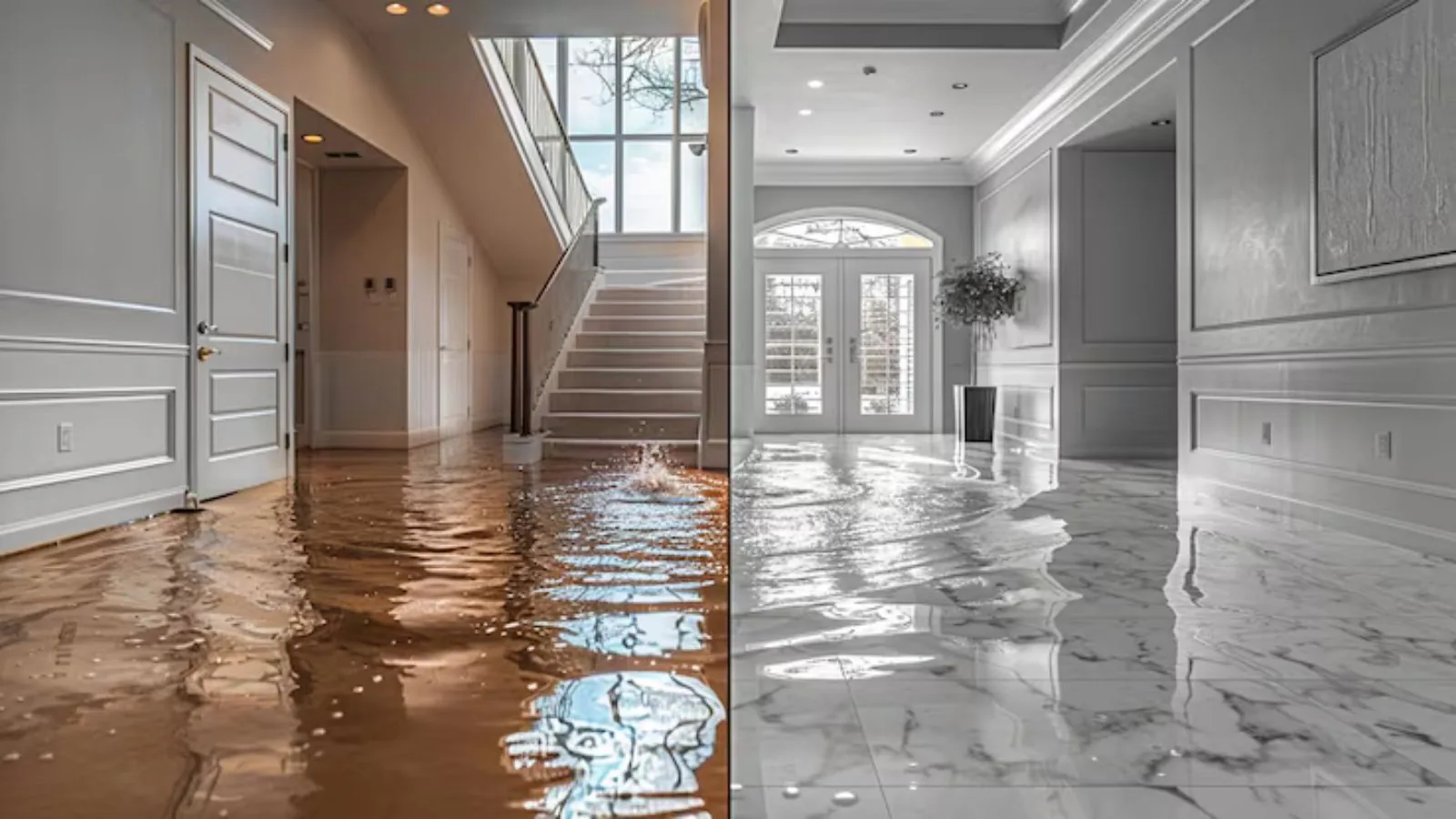
Flood water is in the house: what to do in the next hour
Flooding is an emergency, and our line is open 24/7, including storm nights. Your first job is safety. Do not wade through water that is above the outlets, and stay out of a flooded basement if you cannot see the electrical panel is dry. If the water is moving or rising, leave and call 911.
Flood water is not clean water. It carries soil, runoff and sometimes sewage, so treat anything it touched as contaminated. Wear boots and gloves, keep children and pets out, and wash hands after any contact.
Once it is safe, take photos of the water line on the walls before anything is moved. Then call us. A crew can start extraction the same day when available, and the earlier the water comes out, the fewer materials need to be thrown away.
Why flooding is treated differently from a pipe leak
A pipe leak starts with clean water. Flood water does not. Under the ANSI/IICRC S500 standard, water that comes from outside, from a ground level overflow or from a sewer is Category 2 or 3, meaning it carries contaminants. That changes the work.
Porous materials that soaked in Category 3 water, such as carpet, pad, insulation and soft drywall, are usually removed instead of dried. Hard surfaces such as concrete, tile and framing are cleaned and treated, then dried. The crew documents each decision so you have a record for your insurer.
Where Dumont's flood risk comes from
Dumont is a small borough of about two square miles in Bergen County. Flooding here is not only a river problem. Here are the paths water takes into homes.
Heavy rain and storm drains
Intense rain can overwhelm street drains and low yards. Water finds window wells, basement doors and foundation cracks. Basement and ground floor rooms take the damage first.
Nearby waterways
Bergen County has several river and brook systems close to Dumont, including the Hackensack River to the south and the Tenakill Brook to the east. Floods in a neighbor town can mean higher groundwater here too.
Where to check your own risk
The FEMA Flood Map Service Center shows the mapped flood zone for any address. Look yours up before you decide whether flood insurance makes sense, and ask the Dumont building department if you are unsure about local rules.
How flood damage is sorted after the water is out
A crew makes a quick decision on each material. The table shows how that usually goes with contaminated water.
| Material | Common decision | Why |
|---|---|---|
| Carpet and pad | Remove and dispose | Porous and hard to disinfect |
| Drywall touched by flood water | Cut out above the water line | Wicks water and holds contaminants |
| Insulation | Remove | Does not dry and cannot be cleaned |
| Hardwood and laminate | Often remove | Swells and traps moisture beneath |
| Concrete, tile, framing | Clean, treat and dry | Non-porous or structural, so they can be saved |
| Furniture and contents | Case by case | Hard goods may clean, soft goods rarely do |
Flood damage gets worse every hour it sits
Call day or night and describe how high the water got and which rooms are wet.
What the crew does once the water is gone
The cleanup follows a sequence so nothing is missed:
- Pump and extract standing water, working in stages in a basement.
- Remove materials that cannot be saved and bag them for disposal.
- Clean and disinfect exposed surfaces with antimicrobial products.
- Set air movers and dehumidifiers, then read moisture levels daily.
- Check framing, subfloor and wall cavities before anything is closed up.
If the loss reached a below-grade room, our page on basement water damage cleanup covers that room type in more detail.
Cost and insurance for flood losses
Price depends on the water category, the depth, how many rooms were affected, and the materials involved. A basement with a few inches of water costs less to restore than a whole ground floor.
This is the place where insurance gets confusing. Standard homeowners policies usually exclude flood damage and need separate flood coverage. Water from a sudden pipe or appliance failure is treated differently. Check your policy or ask your insurer which one applies. Want your real number? Call (844) 950-6900 and we will explain the scope and price before work starts.
Frequently asked questions
Yes. The line is open 24/7. Storms often hit overnight, and a same-day response is offered when a crew is available. Call as soon as it is safe and describe the water level.
Not until power is off and you are sure the water is not near live wiring. Flood water can also carry contaminants. If the panel is in the flooded area, stay out and call the electric utility or 911.
Flood damage means water rising from the ground or a waterway. Storm water damage usually means rain or wind getting through a roof or wall. Both can happen in the same storm. See our storm water damage page for the second case.
Usually not. Flood damage typically needs a separate flood policy. Water from a sudden pipe or appliance failure is treated differently. Check your policy or ask your insurer.
Use the FEMA Flood Map Service Center with your address. It shows the mapped zone, and your lender or insurer can explain what it means for coverage.