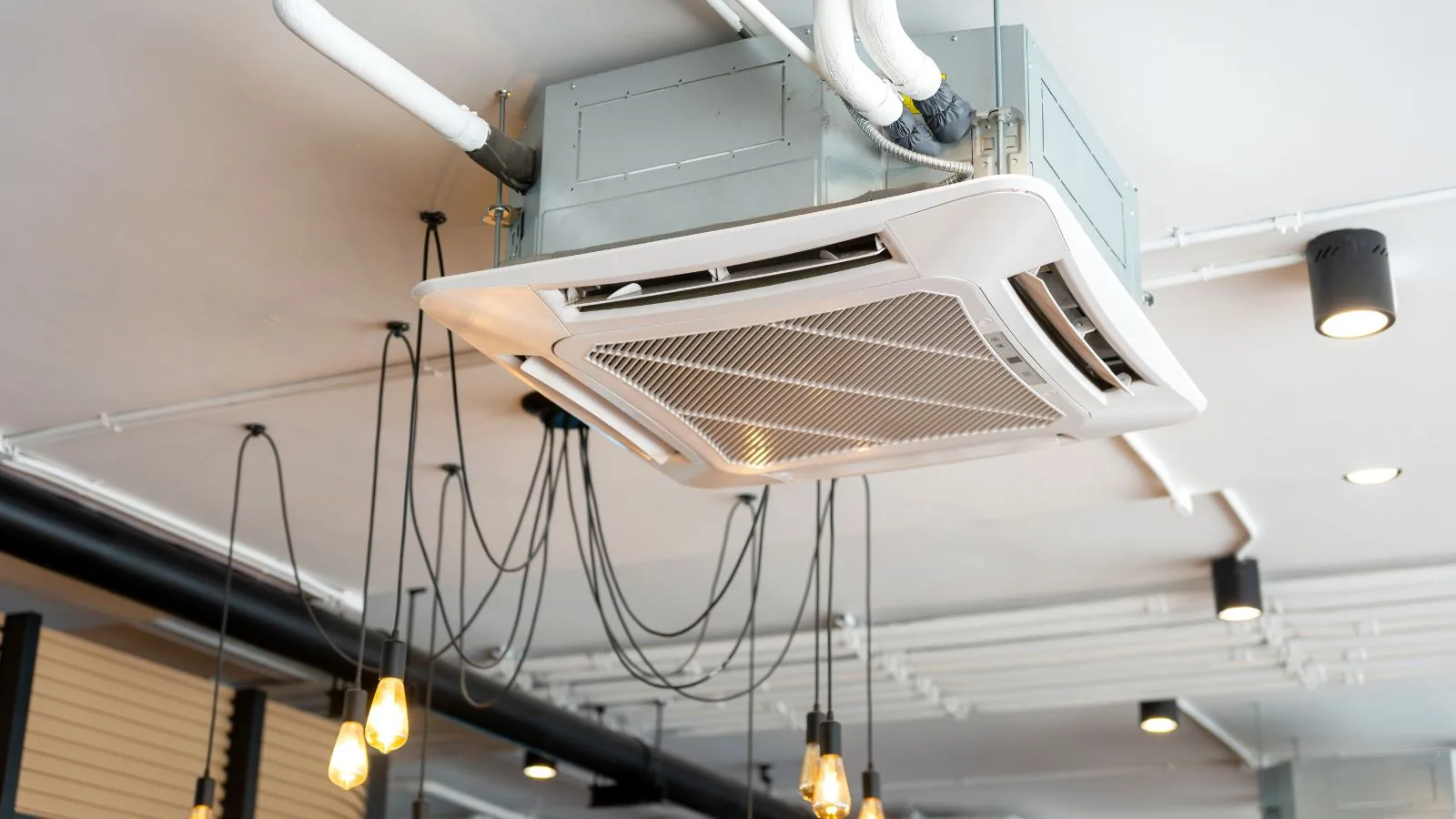
How an air conditioner ends up leaking inside the house
Air conditioners remove moisture from the air as they cool it. That moisture collects in a pan and leaves through a condensate drain line. When the line clogs, the pan overflows and water goes where gravity takes it, which is often a ceiling, a closet floor or an attic.
The leak is usually slow, so the damage can build for weeks before a stain appears. If the air handler is in the attic, the water may soak insulation and the ceiling below before anyone notices. This page covers the water damage left behind, and an HVAC technician fixes the system.
Turn the system off, then dry the area
If you see water, switch the AC off at the thermostat so it stops making more. Do not run the fan to try to dry the area, because it can push water into other spaces. Place a bucket or towels, and move belongings out of the way.
If the leak is above a ceiling, treat the ceiling with caution. A stained ceiling may be holding water. Call us and describe where the air handler and the stain are. An AC leak is not always an emergency, but a sagging ceiling or water near electrical fixtures is, and our line is open 24/7 for those calls.
Common causes of AC water damage
The fix depends on the cause, and an HVAC technician should confirm it:
- A clogged condensate drain line from algae or debris.
- A cracked or rusted drain pan under the air handler.
- A frozen evaporator coil that thaws and overflows the pan.
- A disconnected or sagging drain line.
- Condensation on poorly insulated ducts in a hot attic.
Ask the technician to clear the line, check the pan and install a float switch that shuts the system off if the pan fills. A float switch is a small part that can prevent a repeat.
Where AC leaks leave damage
Location of the air handler decides what gets wet.
| Air handler location | Common damage | What the crew does |
|---|---|---|
| Attic | Wet insulation, ceiling stains, sagging drywall | Remove wet insulation, dry framing, see ceiling water damage |
| Closet or utility room | Wet flooring and baseboards | Extract, lift flooring, dry walls |
| Basement or crawl space | Wet joists, subfloor, stored items | Dry framing, check for mold risk |
| Ceiling cassette or minisplit | Ceiling stains below the unit | Open the ceiling, dry, repair |
An overflowing pan can soak an attic ceiling for days
Call day or night and tell us where the air handler is.
How the damage is dried
The crew locates the water with a moisture meter and thermal camera, removes wet insulation or soft drywall, and sets air movers and dehumidifiers. Because AC leaks are slow and warm, the materials often have had days of moisture exposure.
That is why this work includes a check for mold growth risk on framing and drywall paper. If you see dark spots on the back of removed drywall, the crew will tell you, and the next step is described on our mold remediation page.
Cost and insurance for AC leak damage
Price depends on how long the leak ran, how much insulation and drywall are wet, and how many rooms were affected. Attic leaks often cost more because of the insulation and the access.
Sudden AC overflow damage is sometimes covered by homeowners insurance, while long-term leaks and lack of maintenance often are not. Wording varies. Check your policy or ask your insurer. Want your real number? Call (844) 950-6900 and we will explain the scope and price before work starts.
Standards behind an air handler leak cleanup
ANSI/IICRC S500 is the published industry standard for water damage restoration, and its steps for extraction, drying and monitoring apply to a ceiling or closet that was wet by a condensate overflow. Homeowners can ask any company whether its crews work to it and how they log readings.
The standard describes good practice and does not guarantee a result. A written scope and daily readings show whether the drying is on track.
What to do before help arrives
If your air conditioner is leaking, these steps are safe for most homeowners:
- Turn off the air conditioner at the thermostat and at the breaker.
- Do not use a wet vacuum near the electrical panel or an outlet that has water on it.
- Place a bucket or towels under the drip and move belongings away.
- Photograph the unit, the drain line and the stained area.
- Do not open a ceiling that is sagging, because it can fall.
Frequently asked questions
Yes. When the pan overflows in an attic, water can soak insulation and stain or collapse the ceiling below. Turn the system off and call if the ceiling is stained or sagging.
It depends on the policy and on whether the leak was sudden or gradual. Check your policy or ask your insurer.
No. An HVAC technician repairs the system. We dry the damaged areas and handle the restoration.
Have the drain line cleared, ask about a float switch, and schedule regular maintenance. Check the drain pan when the system starts for the season.
Yes. Our line is open 24/7 and a same-day response is offered when a crew is available.