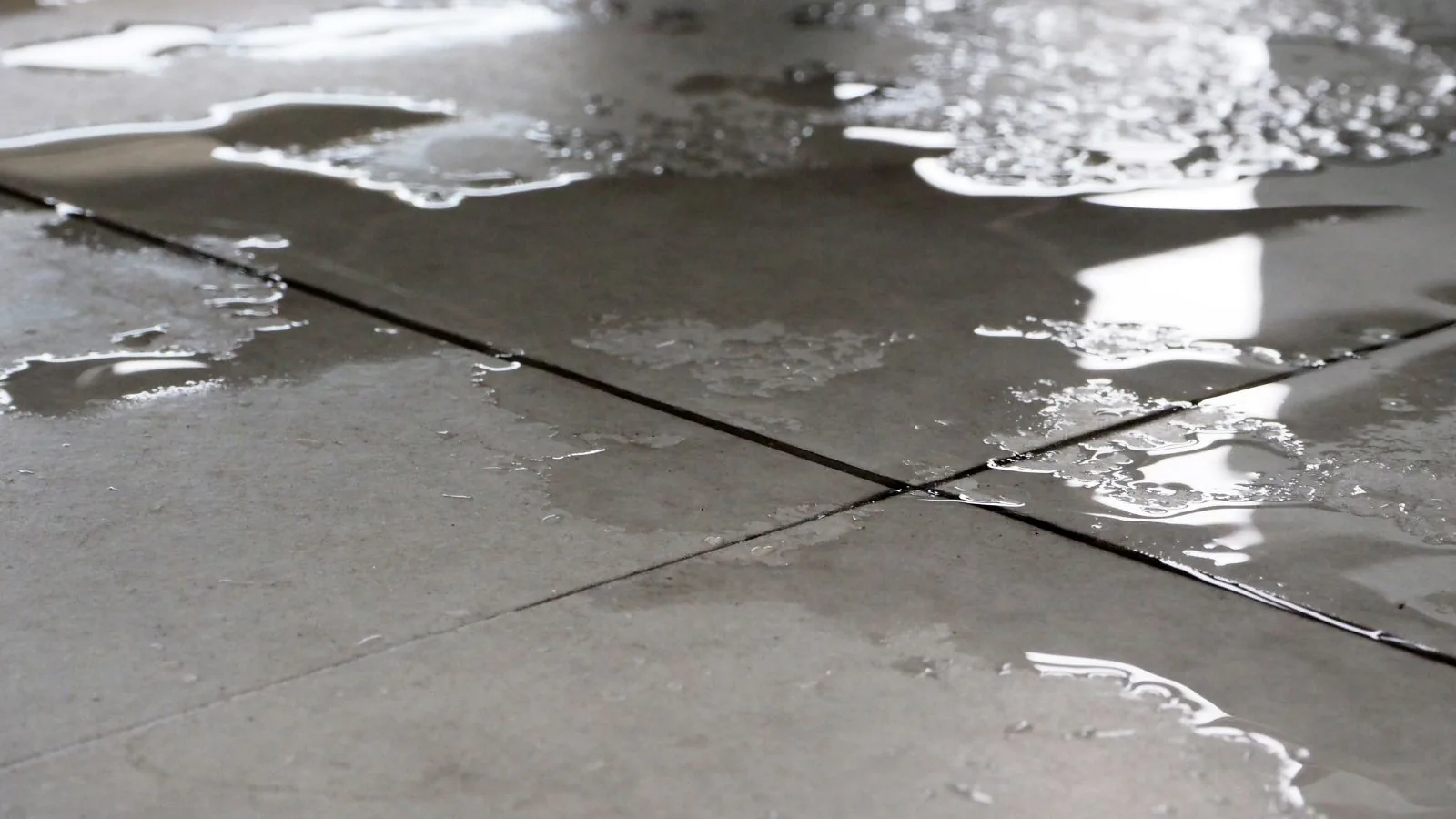
Water coming up through the floor, a warm spot, or a high bill: that is how a slab leak shows up
A slab leak is a leak in a water line that runs under or inside a concrete slab. Homeowners rarely see the pipe. They notice a warm patch on the floor, damp carpet near a wall, the sound of running water, or a water bill that jumps with no change in use.
If water is visibly coming up, shut the main valve and call. This is an emergency, and our line is open 24/7, including after hours when a slab leak makes itself known. A crew can start drying the same day when available while a licensed plumber locates the pipe.
How common slab leaks are in Dumont
We do not claim slab leaks are common here, and we cannot point to a local figure. A slab leak only applies to a home or a part of one built on a concrete slab, such as an addition, a garage conversion, a sunroom or a section of the house at ground level.
If any part of your house sits on a slab with water lines beneath it, this page applies to you. Your plumber can tell you where the lines run, and the borough building department can tell you what plans are on file for your address.
Signs of a slab leak
Look for these signs together, not one by one:
- A warm or hot spot on the floor that you can feel with bare feet.
- Damp carpet, curling flooring or water along a baseboard.
- The sound of water running when everything is off.
- A water meter that keeps moving with all fixtures off.
- A sudden rise in the water bill.
A plumber confirms a slab leak with electronic leak detection. We do not diagnose the pipe, we dry the damage once the source is found.
What slab leaks do to a home
Water under a slab can saturate the soil, lift flooring from below, and wick into the bottom of walls. Because the source is under concrete, the water may leak for a long time before anyone sees it.
The damage is moisture in flooring, baseboards and drywall, sometimes with mold growth if the leak is old. Concrete itself can hold moisture and release it slowly, which is why drying can take longer than a surface leak.
Who handles which part of a slab leak
Slab leaks involve more than one trade.
| Step | Who does it | Notes |
|---|---|---|
| Confirm and locate the leak | Licensed plumber | Electronic detection or pressure testing |
| Stop and repair the leak | Licensed plumber | Repair, reroute or repipe options |
| Extract water and dry flooring and walls | Restoration crew | Moisture meters, air movers, dehumidifiers |
| Replace finishes | Flooring or general contractor | After readings are dry |
A slab leak needs a plumber and a drying crew
Call day or night and we will start the drying side.
Drying after a slab leak
The crew finds the wet materials with a moisture meter and thermal camera, removes flooring that cannot be saved, and sets air movers and dehumidifiers. Because concrete dries slowly, readings are taken for several days.
If the plumber needs to open the slab, plan for dust and noise, and ask whether the area will be sealed off. Wall damage from the same leak is covered on our wall and drywall water damage page.
Cost and insurance
Price depends on how much flooring and wall area is wet, how long the leak ran, and how many days of drying are needed. Plumbing repair is separate.
Slab leak coverage varies a lot between policies. Some cover resulting damage but not the cost of reaching the pipe. Check your policy or ask your insurer. Want your real number? Call (844) 950-6900 and we will explain the scope and price before work starts.
What to do before help arrives
If you suspect a slab leak, start with these steps:
- Shut off the main water valve and check whether the meter still moves.
- Do not run the water heater with the main off, because it can overheat.
- Keep electronics and furniture off warm or wet floor spots.
- Photograph damp flooring, baseboards and any cracks.
- Call a plumber with leak detection tools for the source.
Frequently asked questions
Yes. The line is open 24/7 and a same-day response is offered when a crew is available. If water is visible, shut the main valve first.
It can be, especially with a high water bill or the sound of running water. A plumber can confirm with leak detection.
No. A licensed plumber locates and repairs the pipe. We dry and restore the damage.
Coverage varies. Some policies cover resulting damage but not the cost to access the pipe. Check your policy or ask your insurer.
Concrete dries slowly, so expect several days of readings. The crew adjusts equipment daily until the dry standard is met.