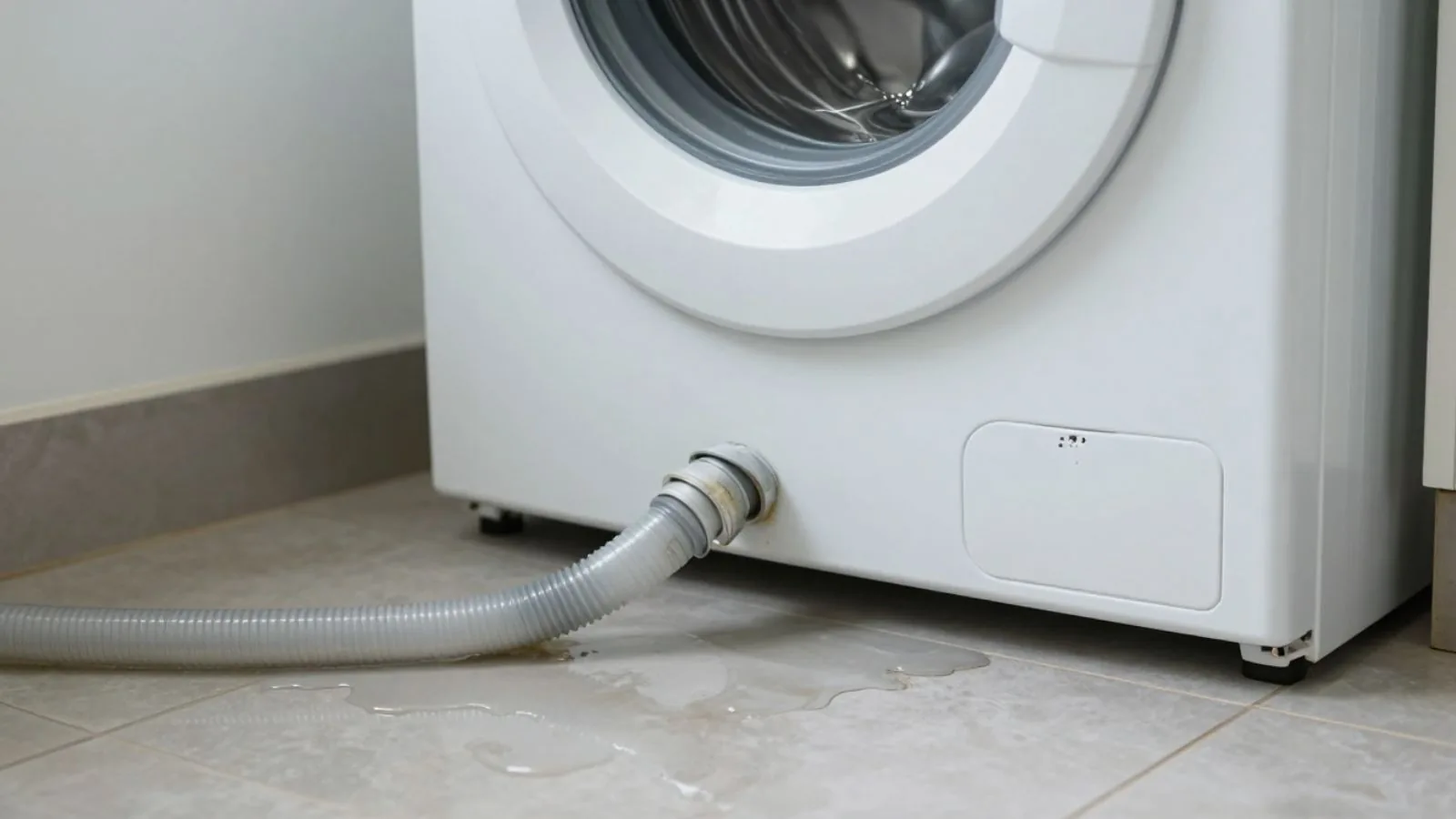
An appliance is leaking: unplug it and close the valve
An appliance leak can start slowly and flood a floor by morning. Treat it as an emergency. Our line is open 24/7. Unplug the appliance only if you can reach the cord without stepping in water. Otherwise turn off the breaker for that circuit.
Close the water valve behind or beneath it. For a washing machine, that is the two hot and cold valves on the wall. For a dishwasher, it is usually under the sink. For a refrigerator with an ice maker, it is the small line on the back or under the sink.
Pull the appliance out only if it is safe, then lift mats and rugs, and call. Water under an appliance runs under cabinets and into the subfloor, where you cannot see it.
How appliance leaks hide until they are big
A hose that weeps can spread water under vinyl or laminate without any pooling. The first sign is a floor that feels soft, edges that lift, or a musty smell. By then the subfloor may be wet.
A washing machine fill hose, left under pressure for years, can split suddenly and spray. A dishwasher drain hose or door seal can drip slowly. A refrigerator ice maker line can leak behind the unit for weeks. The slow ones cause the most hidden damage.
Common appliance leaks and where the water goes
Each appliance has its own pattern.
| Appliance | Common failure | Where the water goes |
|---|---|---|
| Washing machine | Fill hose burst, drain hose pop-off, door seal | Laundry floor, then adjoining rooms and below |
| Dishwasher | Door gasket, drain line, inlet valve | Under the cabinet, into the subfloor |
| Refrigerator | Ice maker supply line, drain pan | Behind the unit, under flooring |
| Utility sink or laundry tub | Supply or drain connection | Cabinet base and floor |
What the crew checks after an appliance leak
The visible puddle is only part of the job. A crew checks:
- Flooring above the subfloor, including the edges where water travels.
- The back and base of the cabinets near the appliance.
- Drywall behind and beside the unit.
- The ceiling below, if the appliance is on an upper floor.
- The supply line and valve, so you know where the leak started.
If cabinets are wet, our kitchen water damage restoration page explains how cabinet bases and toe-kicks are dried or replaced.
A slow appliance leak can damage the floor beneath it
Call day or night. A crew can start the same day when available.
Drying the floor beneath the appliance
The crew extracts water, lifts or removes flooring when needed, and sets air movers and drying mats under the cabinet edges. Dehumidifiers lower the moisture in the air so materials can release water.
Vinyl and laminate often need to come up because water trapped beneath them does not escape. Tile may survive, but the grout and the subfloor below are checked. Hardwood follows the process in our hardwood floor water damage repair page.
Cost and insurance for appliance leaks
Price depends on how long the leak ran, how much flooring is involved and whether cabinets or walls were reached. A fast catch with dry subfloor is a small job. A long hidden leak under a kitchen floor is much bigger.
Sudden failures of an appliance supply line are often covered by homeowners insurance, while gradual leaks and neglect often are not. The appliance itself usually is not covered. Check your policy or ask your insurer. Want your real number? Call (844) 950-6900 and we will explain the scope and price before work starts.
The standard that guides drying after an appliance leak
When a washer hose or dishwasher line fails, crews dry the structure the way ANSI/IICRC S500 describes. That means finding the wet material, controlling humidity and checking readings until they match a dry reference.
You can ask a company which published standard its crews follow. A claim to follow a standard is not a certification claim, so ask how it shows up in the daily records.
What to do before help arrives
A leaking appliance can be made safe in a few minutes:
- Unplug the appliance only if the outlet and the floor are dry.
- Close the shutoff valve behind or beside the appliance, or the main valve.
- Do not pull a heavy appliance across wet flooring, which can tear it.
- Mop up standing water and photograph the damage.
- Do not run the appliance again until a technician checks it.
Frequently asked questions
Yes. The line is open 24/7, and a same-day response is offered when a crew is available. Unplug the appliance and close its valve, then call.
Only if you can reach the cord without standing in water. If not, turn off the breaker for that circuit, or call the electric utility if water reaches the panel.
Soft spots, lifted edges, discoloration, or a musty smell suggest it. A moisture meter finds it without removing flooring.
Sudden hose failures are often covered for the damage they cause, but not for the appliance itself. Check your policy or ask your insurer.
Many plumbers recommend replacing aged rubber hoses with braided lines. Ask a plumber or appliance technician for your appliance.