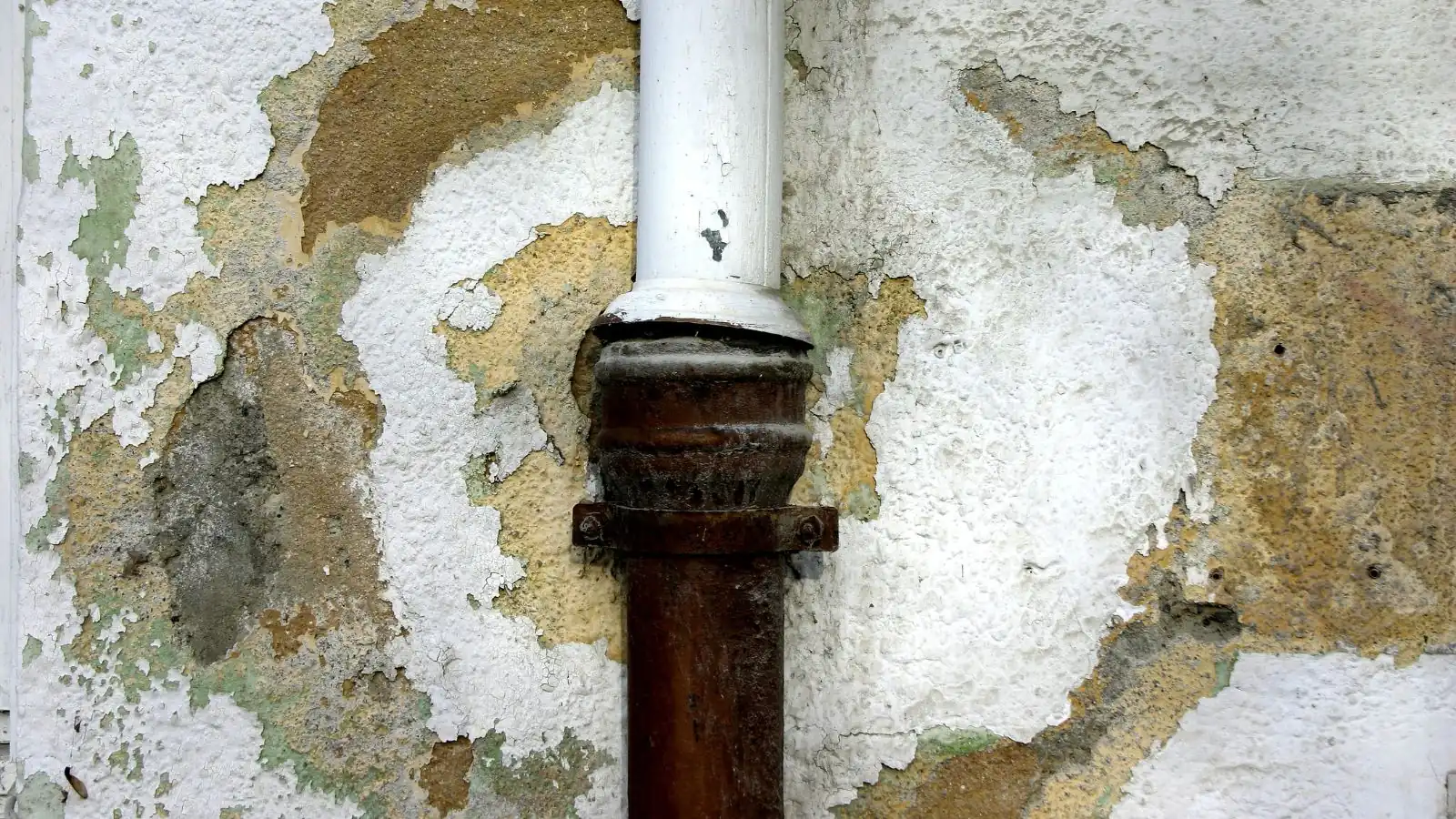
A wall that is stained, bubbling or soft: what it means
A water-damaged wall can show a brown stain, bubbling paint, a soft spot, baseboards pulling away, or a musty smell. These signs mean water has been in the drywall or behind it. Close the water source first, then call. Our line is open 24/7 and a same-day response is offered when a crew is available.
Do not poke the wall repeatedly, and do not paint over it. Take photos, note when you saw the damage, and keep people away from any wall that sags or bulges.
Why drywall and baseboards suffer first
Drywall is gypsum between sheets of paper, and the paper absorbs water readily. Wet drywall loses strength, swells and stains. Baseboards, which sit at the bottom of the wall, soak water from the floor.
Water also runs down inside the wall and pools on the bottom plate. A wall can look fine from outside and be wet inside, so crews check with a moisture meter and thermal camera, and may drill small holes at the baseboard to let air in.
Dry in place or cut out: how it is decided
The choice depends on the damage.
| Condition | Usual choice | Reason |
|---|---|---|
| Lightly wet, caught fast, clean water | Dry in place | Gypsum can recover if it stays firm |
| Soft, swollen, crumbling | Cut out and replace | It has lost strength |
| Wet with contaminated water | Cut out | It holds contaminants |
| Wet for days with mold growth | Cut out, see mold remediation | Mold grows on paper |
Plaster and lath walls
Older homes may have plaster over wood lath instead of drywall. Plaster dries slowly and can crack or detach. A crew checks it for loose sections, and a plasterer usually repairs it.
If you suspect old paint or plaster material, ask about testing before heavy sanding.
A wet wall can soak insulation and framing
Call day or night.
How a wall repair is done
The steps follow a sequence:
- Find the source and the extent of the water.
- Remove wet baseboards and cut drywall above the water line if needed.
- Dry the cavity with air movers and dehumidifiers.
- Check readings until the wall is dry.
- Replace insulation, drywall, tape, texture and paint.
If the wet wall is in a kitchen, see our kitchen water damage restoration page. If water came from above, ceiling water damage repair may also apply.
Baseboards, trim and paint: the finishing details
Baseboards are the first thing to swell and lift after a floor leak. If they are painted wood, they can sometimes be removed, dried and reinstalled. If they are MDF or finger-jointed pine that has swelled, replacement is better. Crews remove them carefully so they can be reused when possible.
Paint is the last step. Do not paint over a wall until the readings are dry, because the paint seals moisture in. Use a stain-blocking primer over water stains, since ordinary paint lets brown rings show through.
Texture matching is part of a good repair. If your wall has a knockdown or orange-peel finish, ask the contractor how they will match it. A patch that stands out is a common complaint after a repair.
Cost and insurance
Price depends on the wall area, the number of rooms, the finish and whether the cavity is wet. Cutting and replacing a section costs more than drying in place.
Sudden leaks are often covered by homeowners insurance, while slow leaks and neglect often are not. Check your policy or ask your insurer. Want your real number? Call (844) 950-6900 and we will explain the scope and price before work starts.
What to do before help arrives
A wet wall may hide wires and pipes, so be careful:
- Stop the water at its source or the main valve.
- Do not cut into a wall near outlets or switches that may be wet.
- Turn off power to that circuit at the breaker.
- Mark the stain edge with a pencil and note the time, which shows whether it grows.
- Photograph the wall and keep any removed pieces if your insurer asks.
The published standard behind wall drying
ANSI/IICRC S500 describes how wet drywall, insulation and framing are assessed and dried or removed. It is a published industry standard, and you can ask a company how its crews apply it to wall cavities.
The standard gives a method, and your own readings decide when the wall is ready to close.
Frequently asked questions
Sometimes, if it is clean water and the board is still firm. Soft or swollen drywall is usually replaced.
Not necessarily. A stain means water was there. Mold has a fuzzy or spotted look and a musty smell, and a crew can tell the difference.
We can repair and paint as part of the restoration or hand off to your contractor.
Yes. The line is open 24/7 and a same-day response is offered when a crew is available.
Water wicks up above where it first reached. Cutting higher lets crews see and dry the cavity.