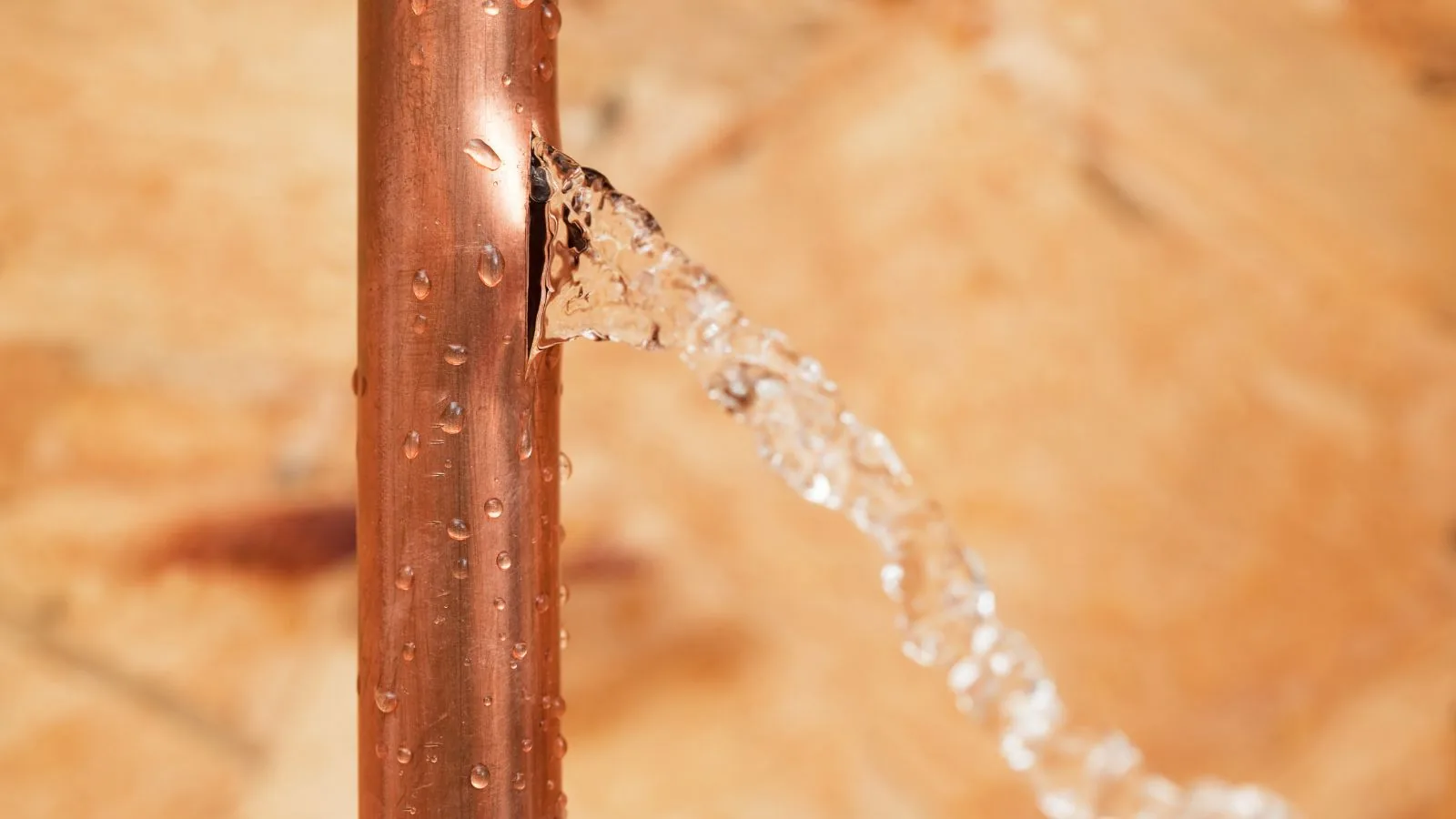
A pipe just burst: shut the water off before anything else
A burst pipe is an emergency, and our crews take calls 24/7, including nights and weekends. While you wait, the single most useful thing you can do is close the main shutoff valve. In most Dumont homes it sits where the water line comes in, near the meter or on a basement wall. Turn it clockwise until the flow stops.
Open one faucet on the lowest floor to drain what is left in the lines. If water is near the electrical panel or outlets, stay back and call the electric utility or 911 before you call us. Do not walk through water that reaches a plugged-in appliance.
Move belongings away from the wet area and take photos of the damage as it is. Then call. Water from a pressurized line keeps moving into the structure until it is dried, even after the valve is closed.
Why pressurized pipes do so much damage so quickly
A supply line holds water at household pressure, commonly somewhere between 40 and 80 psi. That is why a split seam or a failed fitting sprays instead of dripping.
Where the water goes
A spray hits the wall, drops behind the drywall, and runs down inside the wall cavity to the bottom plate and subfloor. A room can look only mildly wet while the cavity behind it is soaked. Moisture meters and thermal cameras find that hidden water.
Why the first hours matter
Drywall and insulation absorb water quickly and dry slowly. Subfloor and wood framing can hold moisture for days. The sooner the water is extracted and air movers start, the more material can be saved instead of replaced.
Common reasons supply lines fail in Bergen County homes
Causes are worth knowing because they tell you what else might fail. Here is what crews see most often:
- Corrosion in older galvanized or copper lines that thins the pipe wall until it splits.
- A loose or aged fitting at a joint, valve or water heater connection.
- A winter freeze that cracks a pipe in an exterior wall or unheated space, which is covered on our frozen pipe water damage page.
- Pressure spikes in the line, sometimes after a repair or from a failing pressure reducing valve.
- Damage from a nail, screw or renovation work that punctured a line.
If you do not know how old your plumbing is, ask a licensed plumber to look at it after the cleanup. Restoration crews dry the damage, and plumbers repair the pipe.
How a burst pipe cleanup is carried out
The crew starts by confirming the water is off and the source is known. Then they extract standing water with pumps and wet vacuums, check the wet area with moisture meters and thermal imaging, and remove materials that cannot be saved, such as saturated insulation or soft drywall.
Air movers and low-grain dehumidifiers go in next. Wall cavities are opened when the water is trapped inside, often by cutting a flood cut a foot or two above the water line so air can reach the studs. Readings are taken daily until the structure matches the dry reading from an unaffected area.
If the pipe ran through a kitchen, laundry room or bathroom, the crew checks cabinets and floors too. Water that reached cabinets is handled the way we describe on our kitchen water damage page.
Dry it, replace it, or rebuild it: how the decision is made
Not everything wet has to go. The choice depends on the material and on how long it stayed wet.
| Material | Often dried in place | Often replaced |
|---|---|---|
| Drywall | Lightly wet, caught quickly | Soft, swollen, or wet for a long time |
| Insulation | Rarely | Usually, because wet insulation dries slowly |
| Hardwood floor | Caught early with drying mats | Cupped or buckled planks |
| Carpet pad | Almost never | Almost always |
| Framing and subfloor | Almost always | Only if rot or deep staining shows |
Replaced does not mean the crew rebuilds everything. Some companies stop at drying and leave reconstruction to a contractor you choose. Ask what is included before work starts.
Call before the damage settles in
The sooner a crew starts, the more of the structure can be dried instead of torn out.
What shapes the cost of a burst pipe job
Several factors set the number. The amount of water and the area it reached come first. Whether the water was clean when it spilled, how many rooms it crossed, and which materials it touched all change the scope. The number of equipment days depends on how quickly the readings fall.
Insurance is part of the conversation for many people. Sudden and accidental pipe failures are often covered by homeowners policies, while long-term leaks and neglect often are not. Read your policy or ask your insurer about your deductible and what counts as covered. Want your real number? Call (844) 950-6900 and we will explain the scope and price before work starts.
Burst pipes near Dumont's neighbors
A pipe does not respect borough lines. If you live just over the line, our crews cover Cresskill and other nearby towns the same way, and you can reach us at the same number. Wherever you are, say where the pipe is and which floor is wet.
Where our drying plan comes from
The plan for a burst pipe job follows ANSI/IICRC S500, the published industry standard for water damage restoration. It sets out how to classify the water, how to dry each material and how to document that the structure reached a dry standard.
Ask any restoration company whether its crews follow this standard. We name it as a reference for good practice and we do not claim a firm certification.
Frequently asked questions
Yes. The line is open around the clock, every day, and a same-day response is offered when a crew is available. Shut the main valve first if you can, then call and say where the pipe is and which floors are wet.
Shut off the main valve, open a faucet on the lowest floor to drain the lines, and keep people away from water near outlets. Move belongings out of the wet area and photograph the damage. Do not use a vacuum on standing water.
Sudden and accidental pipe failures are often covered, while gradual leaks and neglect often are not. Wording varies by policy and flood damage is usually excluded, so check your policy or ask your insurer. We document the loss so you have records to share.
Restoration crews dry and restore the damage. Pipe repair is plumbing work and is done by a licensed plumber. It is smart to have the plumber look at the rest of the line while the wall is open.
A wall can feel dry while the cavity is wet. Moisture meters and thermal cameras detect it without cutting. If a stain, bubbling paint or a musty smell appears after the cleanup, call and ask for a recheck.