Water is on the floor right now: do these four things first
If water is standing in your Dumont home, this is an emergency, and our line is open 24/7 for exactly this call. While you wait for a crew, find the source and stop it. For a pipe, that means the main shutoff valve, usually where the water line enters near the meter or in the basement.
Next, think about electricity. If water is near outlets, power strips, or the panel, stay out of the room and do not touch anything plugged in. Cut power at the panel only if you can reach it while standing on dry ground. If you cannot, call the electric utility or 911 before you call us.
Lift what you can off the wet floor, such as laundry, books, rugs and small furniture. Keep children and pets out. Then call, because water extraction is a race against the clock. Every hour a floor stays wet, more water wicks into baseboards, subfloor and the bottom of the walls.
What water extraction actually means
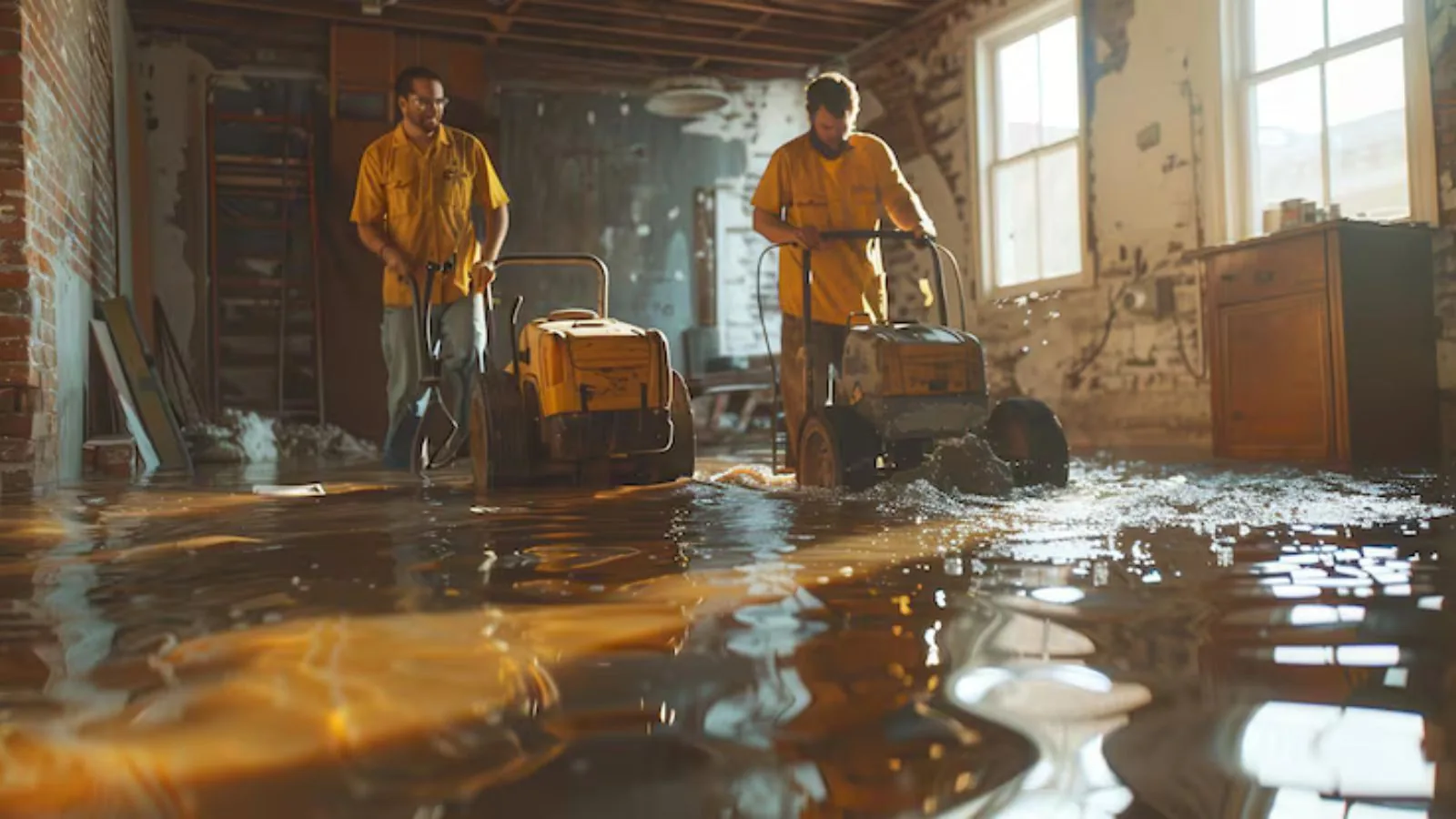
Water extraction is the physical removal of standing and pooled water from floors, carpet and low spaces. It comes before drying and before any repair. A crew uses submersible pumps for deep water, wheeled extraction units and wet vacuums for shallow water, and weighted extraction tools that pull water out of carpet and pad.
The goal is volume. A room can hold tens of gallons that no fan or dehumidifier can pull from the air quickly. Dehumidifiers handle moisture in the air and in materials, while extraction handles liquid water you can see. Skipping the first step makes the second take far longer.
Extraction is also a sorting step. The crew checks which materials can be saved by drying and which have soaked too long. That call is easier to make early, when pad and drywall have not yet wicked water upward.
How the water's depth and source change the job
Not every wet floor is the same job. The table shows how the common situations differ, and the water category matters because it sets the safety steps.
| Situation | Usual water category | What the crew does first |
|---|---|---|
| Supply line or tank leak, clean water, shallow | Category 1 | Extract with wet vacuums and extraction wands, then set drying equipment |
| Washing machine or dishwasher overflow | Category 1 or 2 | Extract, check pad and baseboards, remove saturated pad if needed |
| Basement with several inches of water | Category 2 or 3 possible | Pump down in stages, wear protective gear, test what is affected |
| Floor drain or toilet backup | Category 3 | Stop, avoid contact, extract with containment, remove porous materials |
| Storm water coming in from outside | Category 2 or 3 | Pump, extract, treat surfaces, and see storm water damage cleanup |
Water categories follow the ANSI/IICRC S500 standard for professional water damage restoration. Ask any company that quotes your job whether its crews work to S500.
Extraction in a Dumont basement, kitchen or ground floor
Dumont is a compact borough of about two square miles, and most calls involve the same few places. Finished basements collect water from a failed sump pump or a heavy storm. Kitchens and laundry rooms see appliance and supply line leaks. Second-floor leaks run down through ceilings into the rooms below.
Each place changes the method. In a basement, a pump pulls the water down gradually, because lowering it too fast can stress walls and floors. On a finished main floor, the crew works room by room so water does not travel under doors into dry rooms. If the leak started upstairs, extraction on the lower floor is usually paired with ceiling water damage repair once the area is dry.
If your home sits near the borough lines with Cresskill, Haworth or New Milford, the same crews cover you. We list the nearby towns we serve on our service area page.
Standing water does not wait for business hours
Our line is answered around the clock. Call and describe what you see.
What gets pulled out, and what gets decided on the spot
Extraction is not only a pump on a hose. A crew walks through and makes decisions that shape the rest of the job:
- Carpet is extracted in place when it is clean water and the carpet is in good shape, using weighted wands.
- Carpet pad is often removed and discarded, because it holds water like a sponge and dries slowly.
- Baseboards may be pulled to let water drain from the wall bottom plate.
- Furniture legs are lifted onto blocks so the floor beneath can be reached.
- Wet contents are moved to dry rooms and photographed for your records.
When the standing water is gone, the work is not finished. The crew moves into structural drying and dehumidification so the materials, not just the surface, reach a safe moisture level.
What shapes the price of a water extraction job
No honest company can name a number before someone looks at the water. These are the factors that move the price:
- The water category, since contaminated water needs protective gear and disposal steps.
- How much of the floor is affected and how deep the water is.
- Which materials are involved, such as carpet, pad, hardwood, tile or finished basement walls.
- How long the water has been sitting before extraction starts.
- Whether drying and repair follow, and for how many days equipment stays in place.
Sudden and accidental water damage is often covered by homeowners policies, while gradual leaks and neglect often are not, and flood damage usually needs separate flood coverage. Check your policy or ask your insurer, because wording varies. Want your real number? Call (844) 950-6900 and we will explain the scope and price before work starts.
Documenting the loss while the water is still there
Take photos and short video before the crew moves anything, including the water line on walls, the source, and any affected belongings. Note the date and time you found it. If you can read the water meter, photograph it.
Keep damaged items you can safely store until your insurer says otherwise. Your photos and a plain list of what was affected make a claim easier to describe later.
Frequently asked questions
Yes. The line is open 24 hours a day, every day of the week, and a same-day response is offered when a crew is available. Call as soon as you find the water. Describe the depth, the source, and whether power is near the water so the right equipment is sent.
As fast as possible. Water wicks into drywall, baseboards and subfloor within hours. EPA guidance says to dry wet materials within 24 to 48 hours to prevent mold growth, and extraction is the step that makes that window realistic.
For a small, clean spill, a wet and dry vacuum is reasonable. Do not use one near standing water that touches outlets or cords, and never use a household vacuum. For more than a few gallons, or any water that did not come from a clean supply line, wait for a crew.
Not always. Water from a supply line is clean at first, but it picks up contaminants from floors and materials. Water from a drain, toilet, or outside flooding should be treated as contaminated. Wear boots and gloves and keep skin contact short until you know the source.
Yes, the same crews serve nearby towns including Haworth, Cresskill, New Milford, Demarest and Oradell. See our service area page for the list.