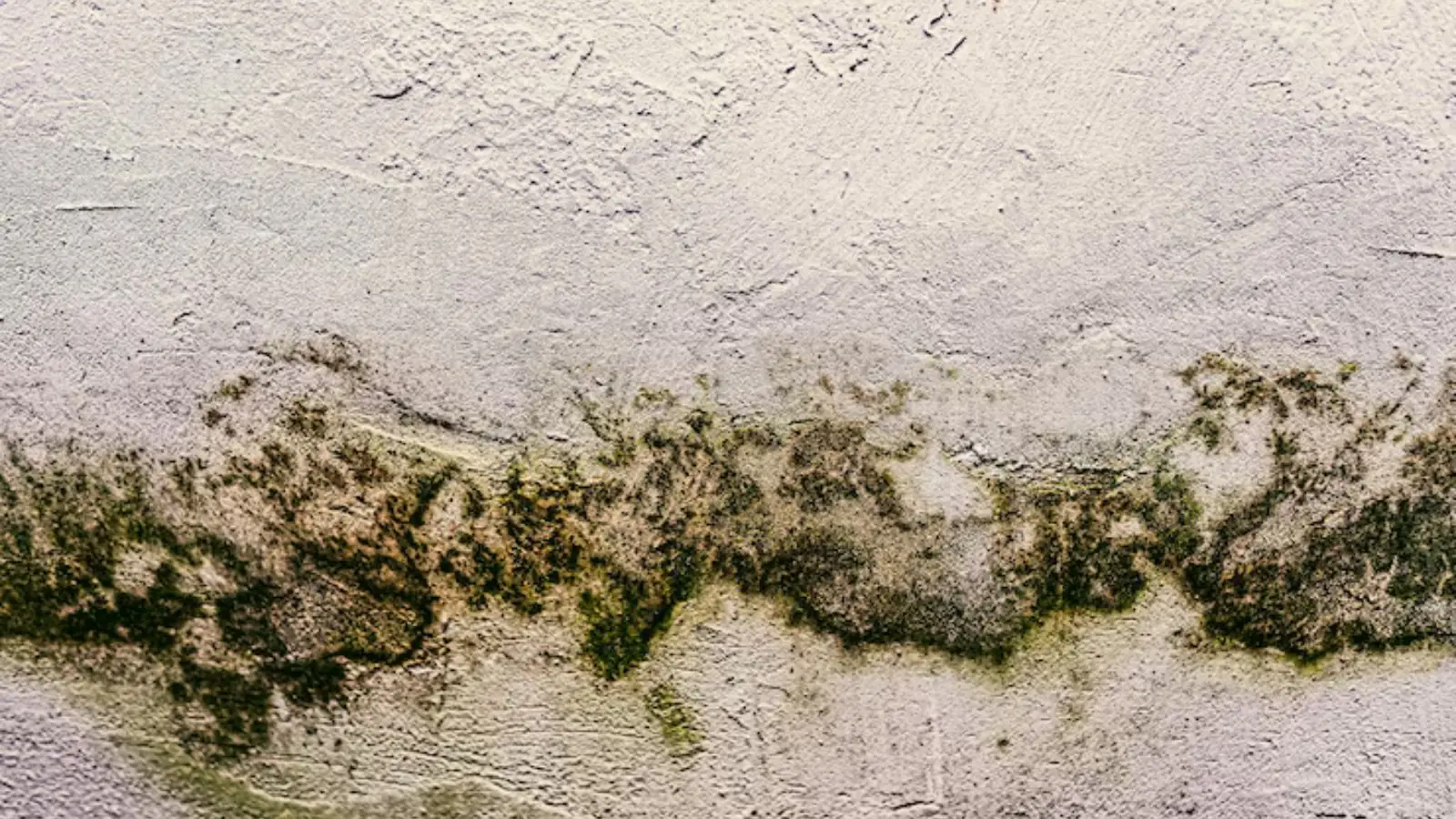
A musty smell, dark spots or a stain that keeps coming back: that may be mold
Many people first notice mold as a smell, a patch of dark spots on a wall or ceiling, fuzzy growth on a basement wall, or a stain that returns after painting. These signs mean moisture is present, and mold remediation is the process of cleaning the growth and drying the area so it has no water to feed on.
Mold remediation is the secondary service we offer, after water damage restoration. Mold nearly always follows water, so the first question is where the moisture came from. If the source is still active, fixing it comes before anything else.
What mold needs, and why moisture decides everything
Mold needs four things: spores, which are everywhere in air, a food source such as drywall paper or wood, a suitable temperature, and moisture. The one you can control is moisture. EPA guidance says to dry wet materials within 24 to 48 hours to prevent mold growth.
That is why mold calls often follow a water loss that was not dried fully. A wet wall behind a vanity, a damp basement corner or a crawl space with high humidity can support growth for weeks before anyone sees it.
We do not make health claims about mold. Questions about how mold may affect a person belong with a physician. What we can do is find it, contain it and clean it.
Mold on different materials: what usually happens
The material decides the method.
| Material | Common response | Why |
|---|---|---|
| Drywall with surface growth | Cut out and replace | Paper facing is food for mold and hard to clean |
| Wood framing | Clean, sand or brush, treat, dry | Structural and can often be cleaned |
| Concrete and block | Clean and dry | Non-porous surface can be treated |
| Carpet and pad | Remove and dispose | Porous and difficult to clean |
| Insulation | Remove | Holds moisture and growth |
Mold does not clear up on its own
Call and describe where you see it.
How a mold remediation job is carried out
The steps follow the ANSI/IICRC S520 standard for professional mold remediation, which sets how growth is contained, removed and verified:
- Find and fix the moisture source, or confirm it has been fixed.
- Set containment with plastic barriers and negative air so spores do not spread.
- Run HEPA air filtration inside the containment.
- Remove materials that cannot be cleaned, and bag them for disposal.
- Clean and treat remaining surfaces, then dry the structure.
- Check moisture readings and, where it is warranted, confirm results with testing.
Ask any company whether its crews work to S520. It is a published standard, not a certification we are claiming for ourselves.
Inspection and testing: what they can and cannot tell you
A visual inspection looks for growth, water stains and moisture. A moisture meter and thermal camera find hidden damp. Air or surface sampling can show whether spores are elevated compared with outdoors, but it does not tell you whether a person is affected.
Whether you need testing depends on the situation. If mold is visible, testing often adds little, because the job is the same either way. If you suspect hidden mold, an inspection comes first. Ask whether your state licenses mold work, because rules differ and the person you hire should be able to tell you.
Where mold shows up after water loss
The most common starting point is a wet building material that stayed wet. A basement that flooded, a leaking roof, a kitchen cabinet base, a ceiling under an AC unit and a crawl space are typical. Our pages on basement water damage cleanup, crawl space water damage and carpet water damage explain how those spaces get wet.
Removing mold without drying the area leaves the cause in place. The final step is always a dry structure.
Cost and insurance for mold work
Price depends on the area of growth, the materials involved, the containment needed and how much drying follows. A small patch on a wall is far less than a crawl space.
Insurance often covers mold only when it results from a covered water loss, and many policies limit or exclude it. Check your policy or ask your insurer. Want your real number? Call (844) 950-6900 and we will explain the scope and price before work starts.
What to do before help arrives
If you find mold, these first steps are low risk:
- Do not disturb the growth, because scrubbing or sanding can spread spores.
- Stop the water source if you can find it.
- Keep fans from blowing across the growth into other rooms.
- Photograph the area and note where it is and how big it looks.
- Keep children, pets and anyone with health concerns out of the area, and ask a physician about any health question.
Mold testing, inspection and clearance
Many callers ask whether they have mold at all. An inspection looks at where moisture is and what is growing, and testing can show whether spores are higher than outdoors. Neither one replaces fixing the leak, and neither tells you whether a person is affected. Health questions belong to a physician.
Some owners want independent clearance testing after the work, so that the person who tests has no stake in the cleanup. Ask what a company will do to show the area is dry and clean, and ask for the readings in writing.
Mold also comes up in home sales. A buyer's lender or inspector may ask for the growth to be removed or documented before closing. We cannot promise what a lender will accept, so ask the lender what paperwork it needs, and keep the scope, the readings and any clearance report together.
Frequently asked questions
It might be. Dirt, soot and water stains can look similar. A trained eye and a moisture reading tell the difference, and cleaning does not help unless the moisture source is fixed.
A musty smell can mean hidden moisture or growth inside a wall, under flooring or in a crawl space. A moisture meter and thermal camera can find it without cutting open the wall.
Bleach can lighten surface staining but it does not fix the moisture, and it does not penetrate porous materials. A crew cleans and removes affected materials following S520.
Not always. If growth is visible, the work is the same. Testing can help with hidden problems, and a professional can tell you whether it makes sense.
Rules differ by state, so ask whether the company you hire is licensed where required, and ask the state agency if you are unsure.
Our line is open 24/7. Mold is rarely an emergency, but water that could feed it is, so call if the area is still wet.