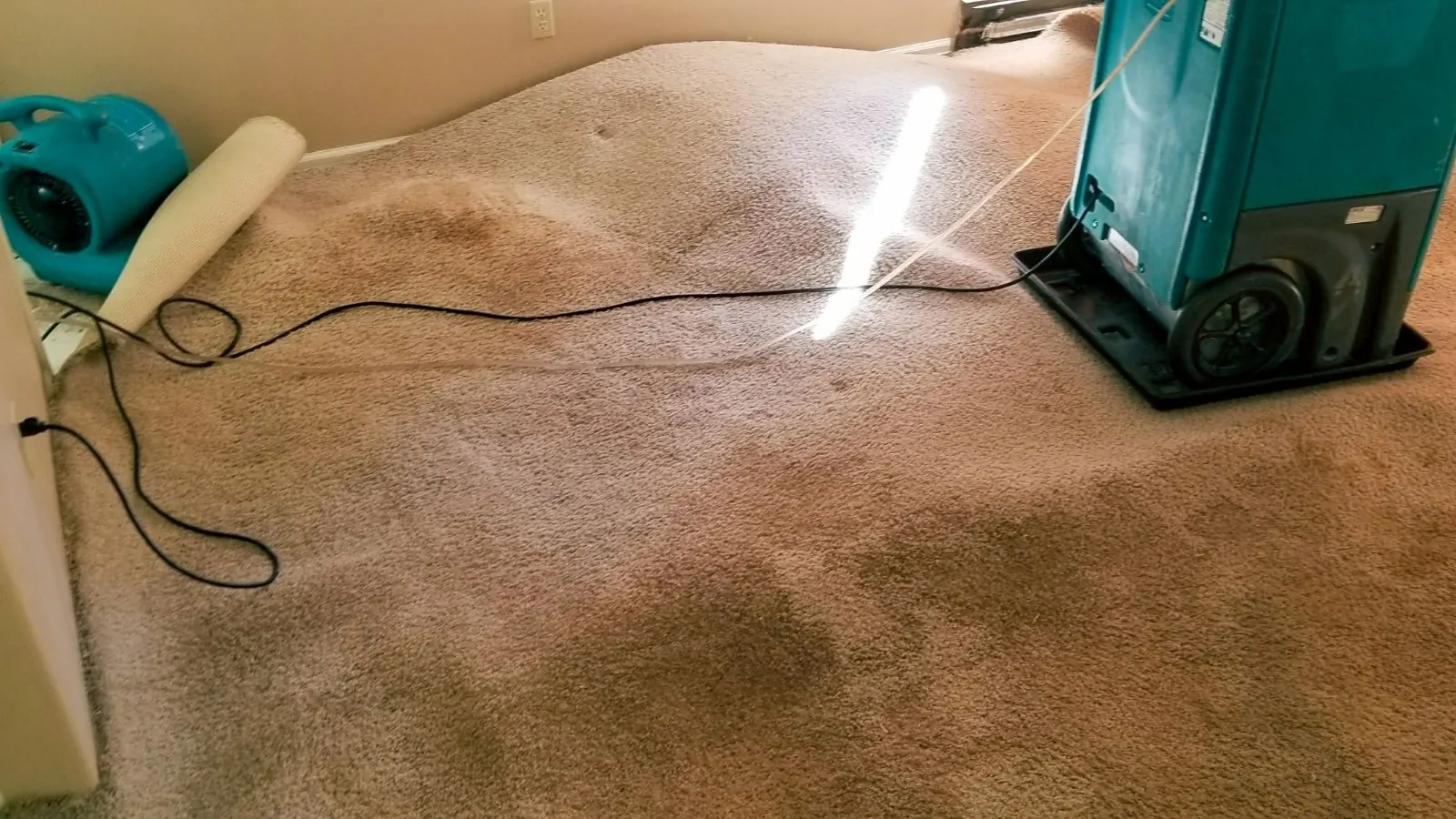
The plain definition
Mitigation means making something less severe. Water mitigation, in the restoration trade, means taking steps to reduce the damage after water gets in. It includes stopping the water, extracting it, drying the structure and protecting contents, and it comes before any rebuilding.
You will see the word on estimates, on moisture logs and in insurance letters. If a line item says mitigation, it is almost always about the first stage of the job, not the repairs.
Three meanings you may run into
The same word is used in three settings. The first is the restoration meaning above. The second is an insurance meaning: many policies say you must take reasonable steps to protect your property from further damage, often called the duty to mitigate. Paying for drying is often how you meet that duty.
The third meaning is about flood planning. Government agencies use hazard mitigation to describe long-term actions that reduce the risk of future disasters, such as elevating a home or improving drainage. That is a different thing from drying a wet basement. If you read about FEMA hazard mitigation, it is about preventing future damage, not cleaning up the current one.
Mitigation, restoration and repair side by side
These three words describe different stages.
| Stage | What it means | Example |
|---|---|---|
| Mitigation | Stop and limit the damage | Pump out water, run dehumidifiers |
| Restoration | Return the home to its previous condition | Replace drywall, repaint, reinstall flooring |
| Repair | Fix a specific broken item | Replace a burst pipe |
Mitigation is time sensitive
Call our 24/7 line.
What mitigation looks like in a real house
Imagine a washing machine hose that splits on a Saturday. Water spreads across the laundry room and into the hall. Mitigation starts with closing the valve, then extracting water, pulling wet baseboards, removing soaked pad from the hall carpet and running fans and dehumidifiers for several days. The crew takes moisture readings each day.
Reconstruction begins only after the readings are dry. A contractor or the same company replaces baseboards, patches drywall, repaints and puts in new carpet pad. Our page on appliance leak water damage covers how that kind of loss is handled.
Why the term matters when you read an estimate
If an estimate lumps mitigation and reconstruction together, ask for them separately. The mitigation part is time sensitive and should start fast. The reconstruction part can wait for your decisions on materials and contractors.
Mitigation line items usually include extraction, equipment days, labor and sometimes containment or disposal. Reconstruction items include materials and finish work. Ask how many equipment days are planned, and how that will be tracked with readings.
The first 48 hours
Most mitigation is front-loaded. The first hours are when water spreads into walls, floors and ceilings, and the first two days are when materials either start to dry or start to deteriorate. That is why crews prioritize arriving, extracting and setting equipment over everything else.
In that window, the goals are simple. Stop the source if possible, remove standing water, open the structure so air can reach wet material and begin controlled drying. Decisions about rebuild can wait, but decisions about extraction cannot.
EPA guidance says to dry wet materials within 24 to 48 hours to prevent mold, and that timeline shapes how mitigation is done.
What you can do while you wait for help
These steps are safe for most homeowners:
- Shut off the main water valve if a pipe is leaking.
- Turn off power to wet areas at the breaker if it is safe to reach it.
- Move furniture, rugs and valuables out of the water.
- Open windows and run fans only if the water is clean and the weather allows.
- Take photos and video before you move things.
If water has touched outlets, or the area may be energized, stay out and call a professional.
Mitigation versus flood planning
The word mitigation shows up in other settings too. Government agencies talk about hazard mitigation, which means steps taken ahead of time to reduce the harm from floods, such as elevating utilities or improving drainage. That is planning for the future.
In this guide, water mitigation means the emergency work after water has already entered a building. The two uses share a root idea, which is limiting harm, but they apply at different times.
If you want to reduce future risk at your house, check the FEMA flood map for your address and ask your building department about drainage and grading. Simple steps, such as clean gutters and downspouts that carry water away from the foundation, help as well.
Mitigation steps in order
Most jobs follow this sequence.
| Step | What happens | Why |
|---|---|---|
| Stop the source | Shut off water or repair the leak | Nothing dries while water keeps coming |
| Extract | Remove standing water | Removes the bulk of the load |
| Remove what cannot dry | Take out soaked pad or damaged drywall | Speeds drying of the rest |
| Dry | Run air movers and dehumidifiers | Brings materials to normal moisture |
| Monitor | Take daily readings | Shows when to stop |
Quick answers
In plain terms, water mitigation is the emergency work that limits damage after water gets in. It is not the same as rebuilding, and it is not the same as planning for floods. Call a crew early, because every hour of delay makes the problem larger.
The standard behind the word
In the restoration industry, mitigation work is guided by ANSI/IICRC S500. It is a published standard that describes water categories, drying goals and monitoring. You can ask a company whether its crews follow it and how they show that in their records.
Dumont note: the FEMA flood map and hazard mitigation
The FEMA Flood Map Service Center shows whether an address is in a Special Flood Hazard Area. For Dumont homeowners, that map is the starting point for flood planning, and it is the sense of mitigation that governments use. Look up your address and ask your insurer about flood coverage, because planning ahead is the only kind of mitigation that happens before the water arrives.
Dumont's building department, part of the borough government at dumontnj.gov, can tell you what local rules apply to changes such as raising equipment or adding drainage. Ask them before you start, because permit rules vary by the type of work. Neighbors in New Milford and Haworth should ask their own boroughs.
Frequently asked questions
It usually refers to the steps taken to reduce further damage, such as extraction and drying.
No. Mitigation limits the damage. Repair or reconstruction fixes what was damaged.
It depends on your policy and the cause. Check your policy or ask your insurer.
It uses the same word for a different idea. It refers to long-term steps that reduce future disaster risk.
Use the FEMA Flood Map Service Center, and ask the building department about local rules.