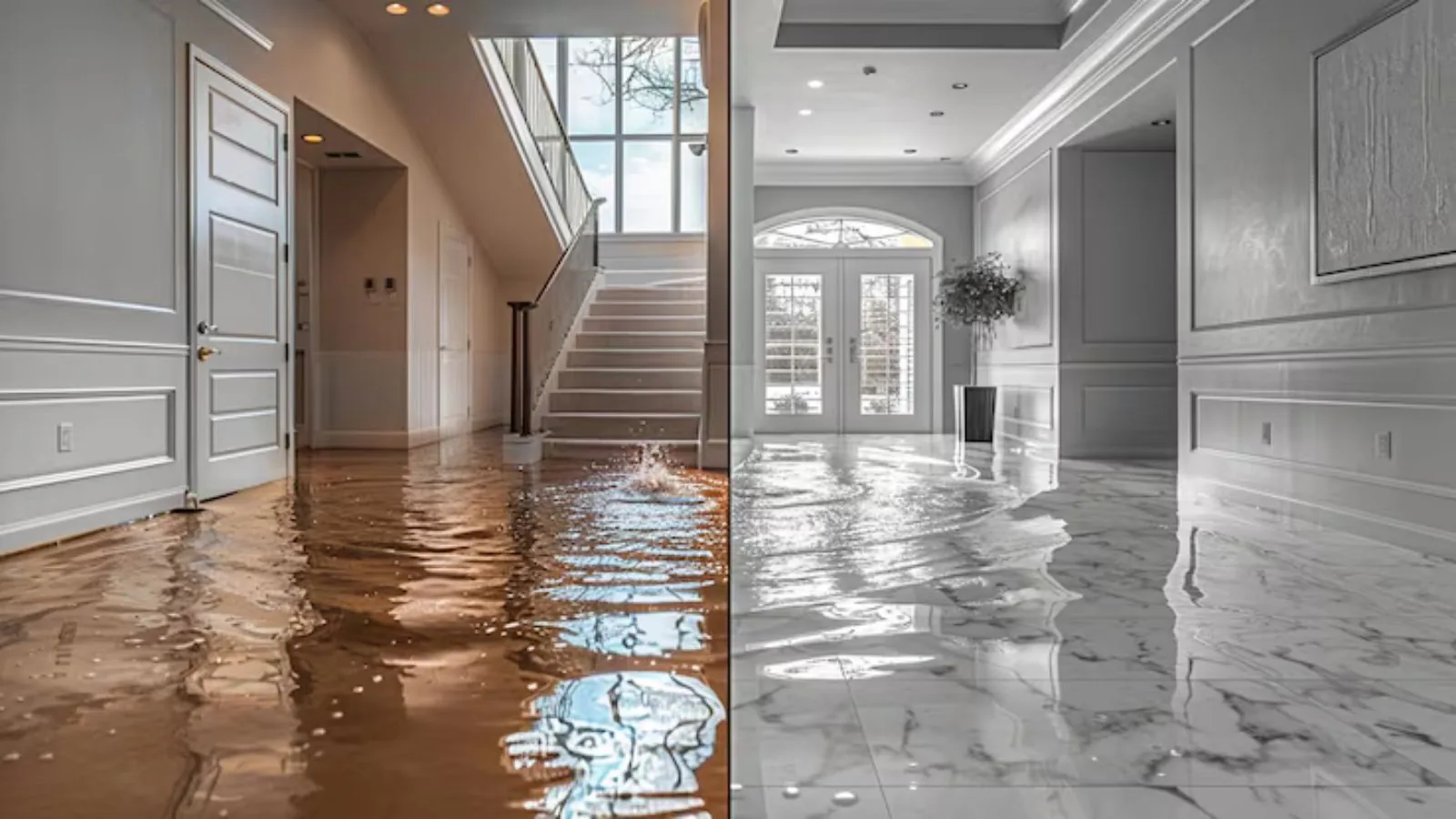
Why the words get mixed up
Restoration, remediation and mitigation are used differently by different companies. Even insurers do not agree on every definition. What matters is what work is actually being done, so use the words as a prompt to ask for a scope.
In practice, restoration means returning a property to its pre-loss condition. Remediation means removing or cleaning up a harmful substance such as mold. Mitigation means stopping the damage from spreading. Each has a place, and a single job may involve all three.
Restoration, remediation and mitigation compared
The terms overlap, but this is how most professionals use them.
| Term | Focus | Typical example |
|---|---|---|
| Mitigation | Stop and limit damage | Extract water and start drying |
| Remediation | Remove a contaminant | Contain and clean mold |
| Restoration | Return to pre-loss condition | Rebuild drywall, floors and paint |
Water remediation: a term that varies
In some regions, water remediation is used the way others use mitigation, meaning the emergency drying stage. In other places, it refers to cleaning up contaminated water, such as sewage. If a company quotes you for water remediation, ask what is included.
Our page on sewage backup cleanup explains the contaminated water side of the work, and our page on structural drying and dehumidification explains the drying side.
Words aside, the water is still there
Call our 24/7 line.
What to ask when a quote uses one of these words
Ask these questions to get past the label:
- What exactly will be done, and in what order?
- Does the price include rebuilding, or only drying and cleanup?
- Which standard do your crews follow?
- How many days of equipment are planned, and how will progress be measured?
- What happens if more damage is found?
Which one do you need?
If water just got in, you need mitigation first. That means extraction and drying, and the sooner it starts, the better. If mold has already grown, you also need remediation, which follows the ANSI/IICRC S520 standard. If materials have been removed and you want the house back to normal, you need restoration, which means rebuilding.
Some companies offer all three. Others specialize. It is fine to hire different companies for different stages, as long as the drying records and scope are passed on, and as long as someone is responsible for each stage.
How the stages fit together on a real job
Take a burst pipe in a second-floor bathroom as an example. First, someone shuts off the water and a plumber repairs the pipe. Next comes mitigation, where a crew extracts water, removes wet material that cannot be saved and sets drying equipment. This stage often happens within hours.
A few days later, once the structure is dry, the owner decides what to rebuild. That is restoration, and it includes new drywall, paint, flooring and trim. If mold was found behind the wall during mitigation, a remediation step would come between the two, with containment and removal before any rebuild.
Seen this way, the words describe stages. A job may use one, two or all three, and the order is usually the same.
Why the labels matter to your insurer and your wallet
Insurance policies often treat these stages differently. Emergency work to stop further damage may be covered in one way, mold work may carry limits and rebuild may follow a separate estimate. Ask your insurer how your policy treats each stage, and ask your contractor to separate them on paper.
Separate lines also help you compare companies. A quote that bundles everything into a single sum makes it harder to tell what you are paying for. A quote that lists mitigation, remediation if needed and restoration as separate items is easier to check.
Finally, ask who is responsible for each stage and who will coordinate them. A gap between stages is where water sits and costs rise.
Words to listen for in a sales call
Here is how to translate the words you may hear:
- Mitigation: stopping further damage now.
- Remediation: removing mold or contaminated material under a defined process.
- Restoration: rebuilding or repairing after the structure is dry.
- Reconstruction: a larger rebuild, often after major damage.
- Make-safe: a short emergency step to remove hazards.
Choosing one company or several
Using one company for all stages keeps communication simple, since one team knows the whole story. The risk is that you rely on a single quote. Using separate companies lets you compare each stage, but you need to pass along records and coordinate timing.
Either way, put each stage in writing. State who does it, what it includes and what it costs. A written plan prevents gaps.
If you already hired a company for drying, ask for the moisture readings before a rebuild contractor starts. A rebuild on a wall that has not reached the dry standard can trap moisture.
What standards say
ANSI/IICRC S500 covers water damage restoration and ANSI/IICRC S520 covers mold remediation. They are published standards used across the industry. A company may say its crews follow them, and you can ask how.
Standards describe good practice, but they are not a guarantee of any particular result. A written scope and daily records show whether a job is actually on track.
A quick summary
Mitigation stops the damage, remediation removes a contaminant and restoration rebuilds. Ask any company which stages its quote includes, in writing. Keep the drying records, since they link the stages together and support your claim.
If water is in your home now, start with mitigation and sort out the rest as the structure dries.
Questions to ask your insurer about each stage
Ask whether emergency mitigation needs prior approval, how long you have to report the loss and what proof they want. Ask how mold is handled and whether there is a sublimit. Ask how they pay for rebuild and whether they pay on estimates or on completed work. Write down the answers, and ask for them in writing if anything is unclear.
Dumont note: local rules and the order of work
Dumont is a borough of 1.95 square miles, bordering Bergenfield, Cresskill, Demarest, Haworth, New Milford and Oradell. Rebuilding after a water loss may need permits for some kinds of work, such as plumbing or electrical changes, while ordinary maintenance is generally exempt under state rules. Ask the Dumont building department what applies before you start.
The order matters. Mitigation first, then remediation if mold is present, then restoration. Our pages for Haworth and Oradell describe how we serve nearby towns.
Frequently asked questions
No. Restoration returns a home to its pre-loss condition. Remediation removes a contaminant such as mold.
It is the first stage. Many companies include it in a restoration job.
No. Remediation is for mold or contamination. Many leaks only need mitigation and rebuilding.
It can be one company or several. Make sure drying records are shared.
Mitigation. Stop the water, extract it and dry the structure. The sooner, the better.